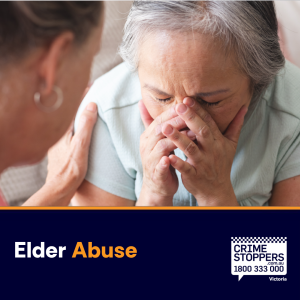
Elder Abuse

Elder Abuse

At least one in six older Australians experience elder abuse in their lifetime.

Many cases go unreported because victims feel scared, ashamed, or dependent on the abuser

At least one in six older Australians experience elder abuse in their lifetime.

Many cases go unreported because victims feel scared, ashamed, or dependent on the abuser

What is elder abuse?

Elder abuse is when a family member, carer or trusted person harms an older person. It is often carried out by someone a victim knows and trusts, such as family, friends or carers.

What defines an older person?

Any person aged over 65 years of age is generally defined as an ‘older person’. 

Who are the abusers?

The majority of perpetrators are other family members – most commonly adult children and grandchildren.

Others can include intimate partners, relatives, or carers.

These crimes must be reported so offenders can be held accountable and victims protected.

Types of elder abuse?

  • Financial – misuse of money, property or assets
  • Emotional & psychological – threats, intimidation, humiliation
  • Neglect – failure to provide food, care or medication
  • Social – isolating from family, friends or community
  • Physical – pushing, hitting, restraining
  • Sexual – unwanted sexual contact or behaviour

Download: Printable Printable Resources...

Download: Printable Printable Resources...

Warning signs?

  • Sudden financial changes or missing valuables
  • Poor hygiene, lack of food or medical care
  • Injuries such as bruises, cuts or broken bones
  • Withdrawal, fear, anxiety or confusion
  • Being prevented from speaking or making decisions

Prevention matters

People experiencing financial abuse often feel ashamed, fearful or worried about damaging relationships. It’s important to reassure them that abuse is never their fault.

  • Stay in regular contact with older loved ones – call and visit often
  • Encourage older people to stay active in their local community
  • Be alert to changes in health, wellbeing or behaviour
  • Be cautious of extended family, friends or carers who may be seeking financial help

A Shared Responsibility

Protecting people from financial abuse is something we can only achieve together. Families, friends, neighbours, healthcare workers and banks all have a role to play.

By recognising the signs, encouraging open conversations and acting early, we can help safeguard freedom and independence for everyone in our community.

Help and Resources

You can make an anonymous report about elder abuse. Report here

A national phone line for elder abuse concerns.

Learn more here

Support and frontline insights into scams, identity theft, and cybercrime.

Learn more here

 For emotional support. 

Call now: 13 11 14

For legal and advocacy support.

Learn more here

Report any suspicious contact or activity.

Learn more here

Contact Victoria Police if the situation is urgent and requires immediate police attendance.

Contact Crime Stoppers Victoria online or over the phone if you have witnessed or know something about sexual violence or harassment.

Contact the Police Assistance Line online or over the phone for non-urgent crimes.

Further Resources

Explore our safety campaigns with expert advice and essential tips on staying safe — at home, on the road, and in Victoria.

This explainer video received grant funding from the Australian Government.

Resources

Explore our safety campaigns with expert advice and essential tips on staying safe — at home, on the road, and in Victoria.

Scroll to Top