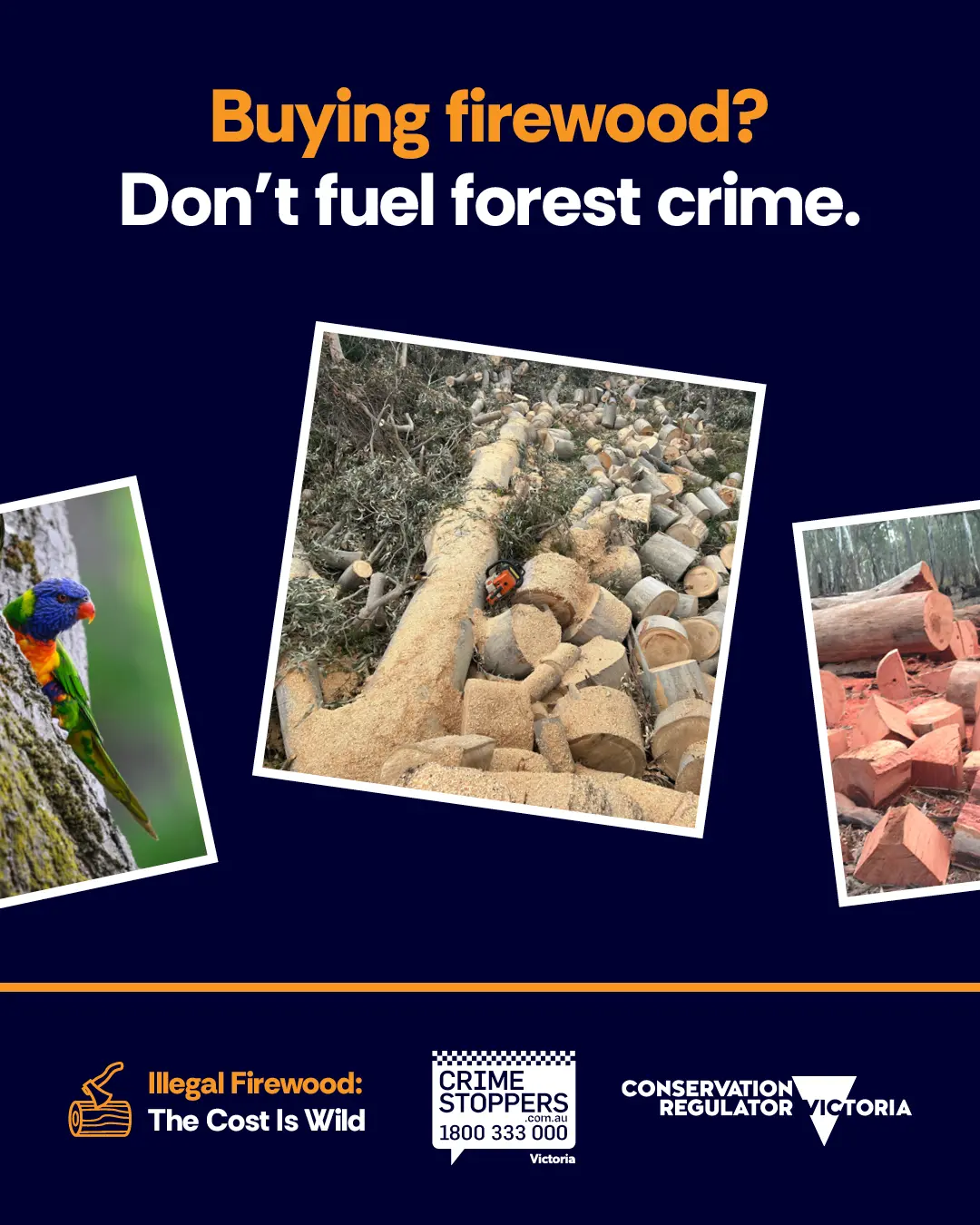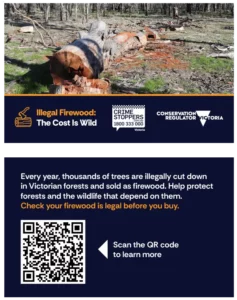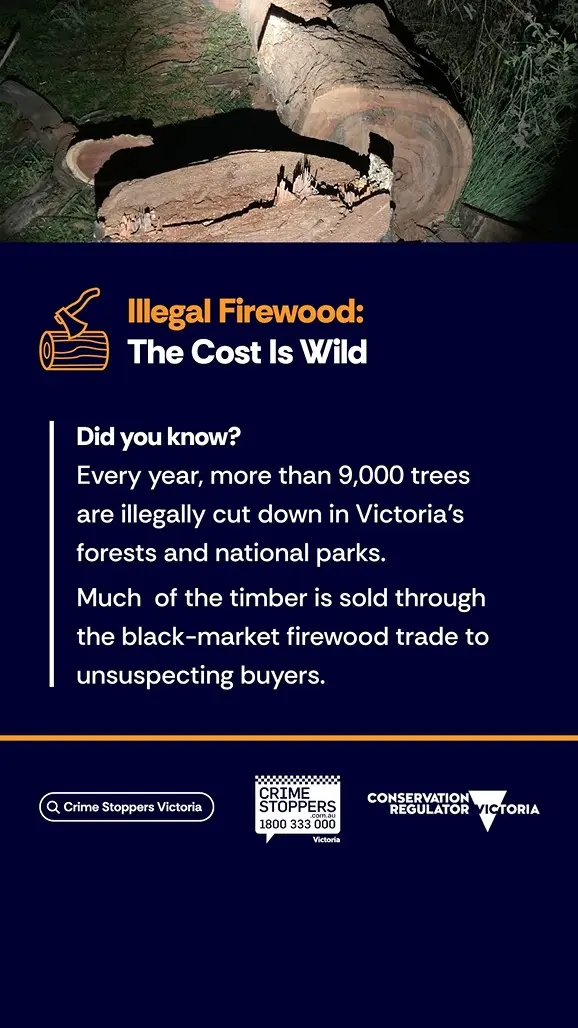
Illegal firewood collection damages cultural heritage and wildlife habitat in Victoria’s forests and national parks.
Firewood can be collected in designated areas during set seasons, for personal use.
Selling firewood collected from these areas is illegal.
Collecting firewood outside of these areas is illegal.
Potential Signs of Illegal Firewood Collection
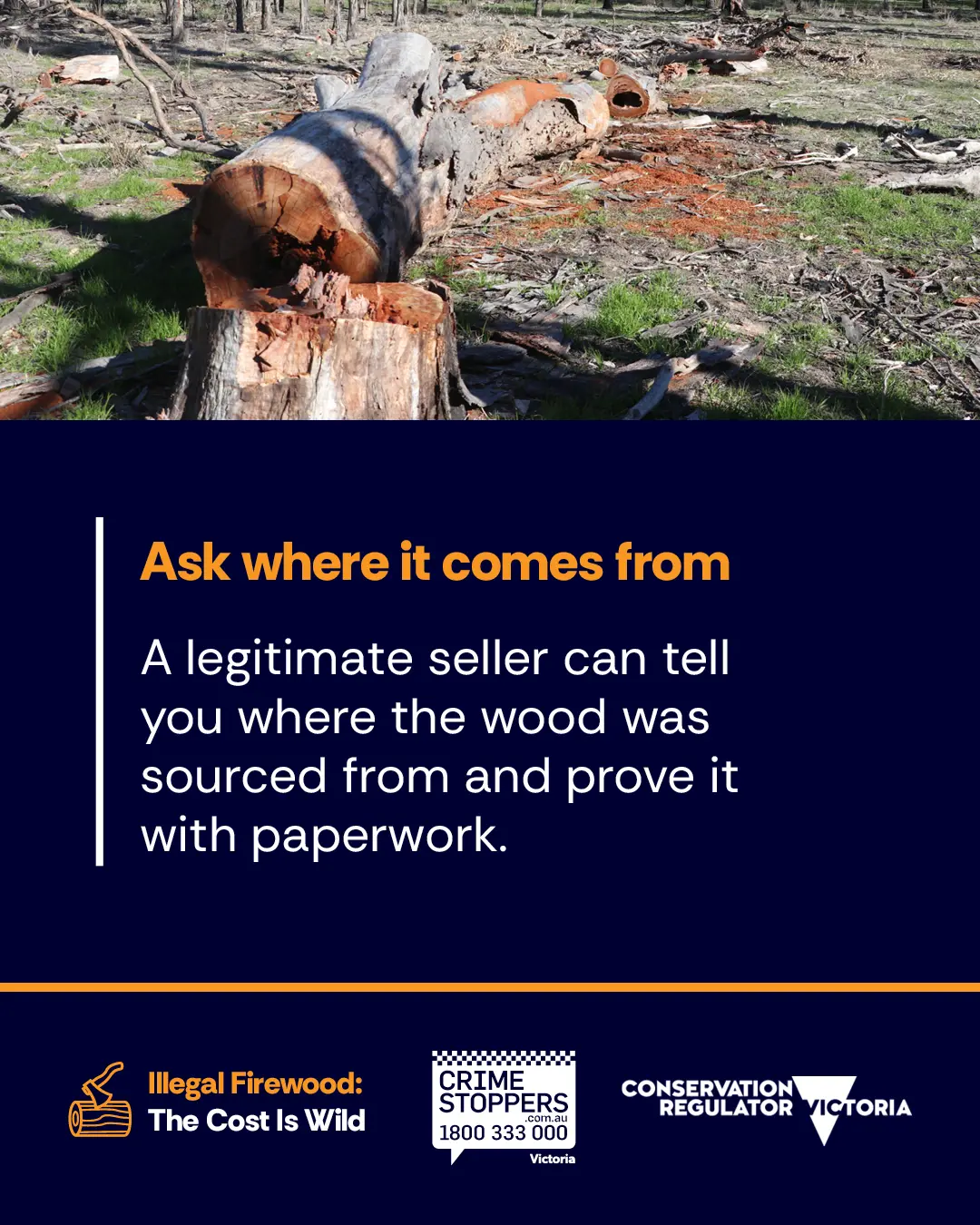
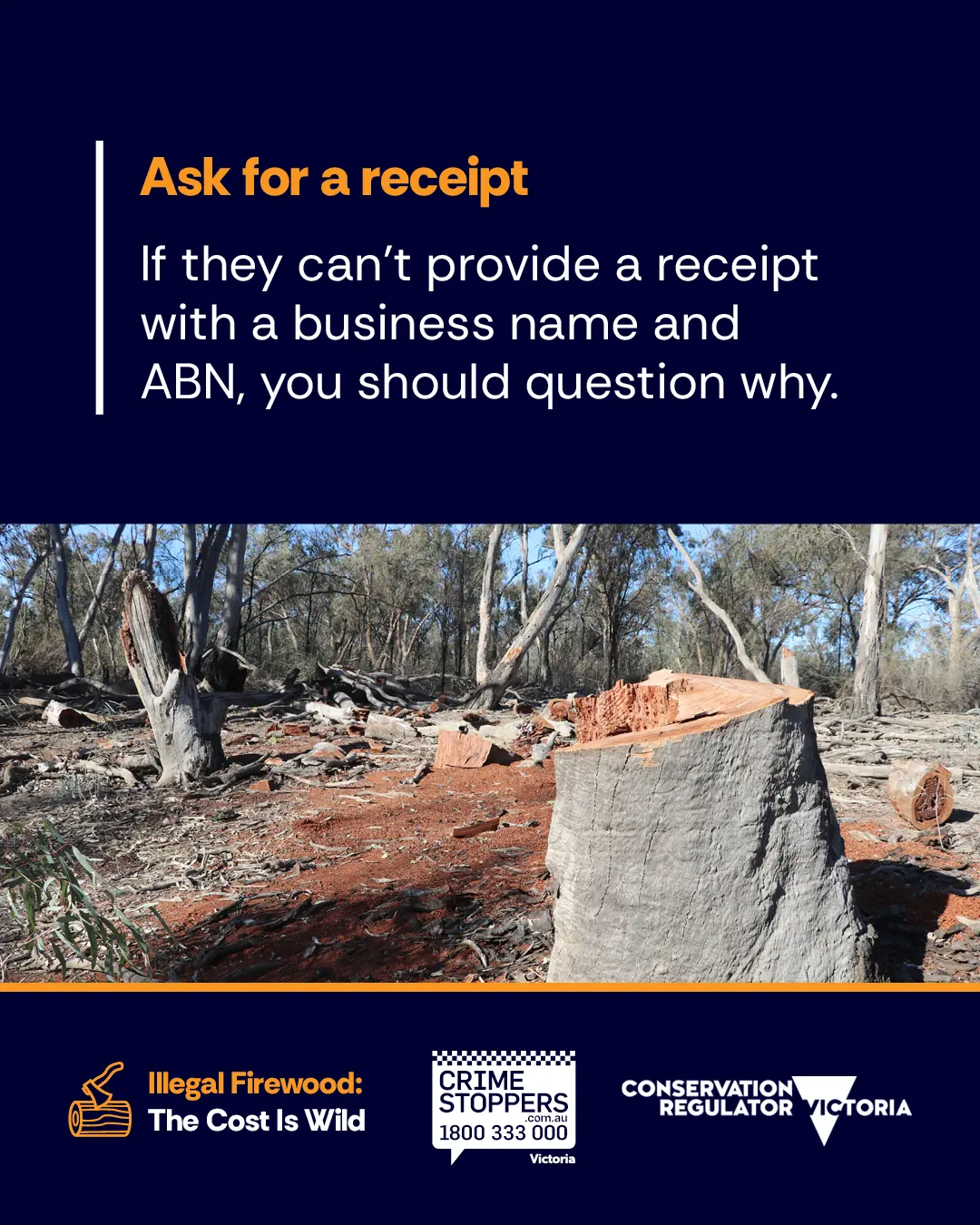
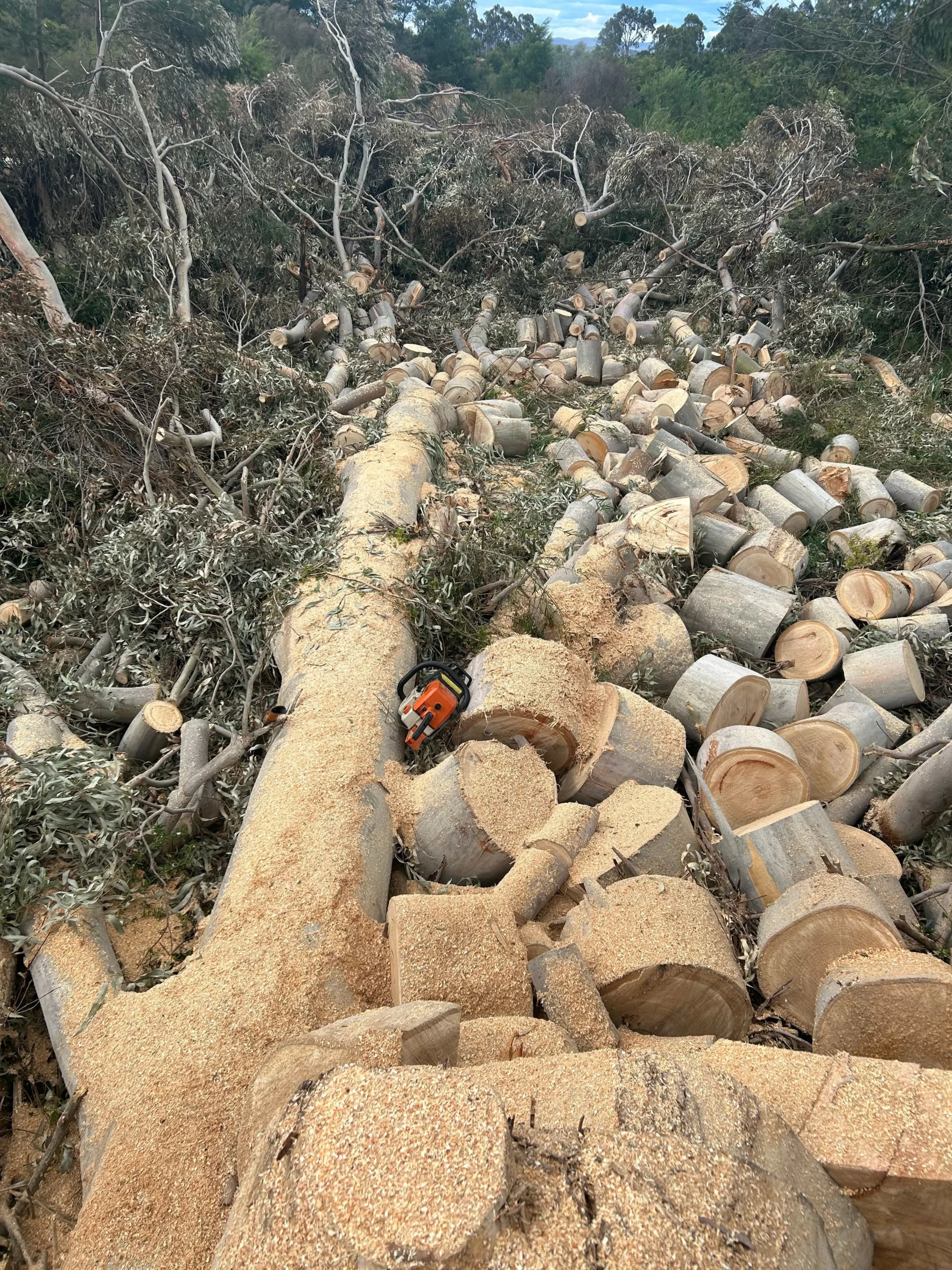
- Recently cut or damaged trees.
- Damaged vegetation, or habitat disturbance.
- Debris, waste, or signs of poor site practices.
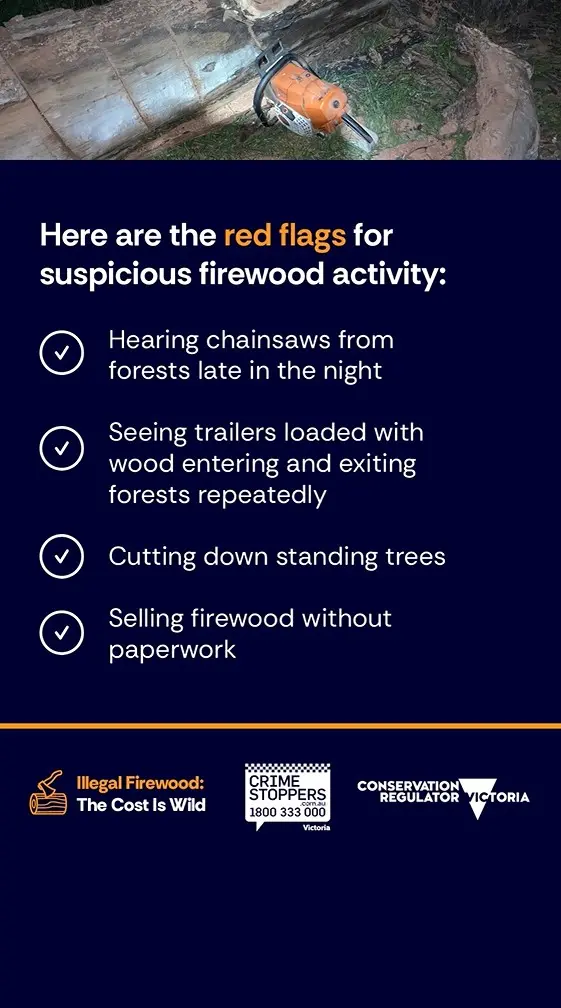
- Chainsaws running at night or outside permitted hours.
- Trailers loaded with wood entering and exiting forests repeatedly.
- Activity in protected, signed, or no-collection areas.
- Vehicles parked off-road or in unusual/closed locations.
- Secretive behaviour or leaving quickly when noticed.
- Collecting large amounts or making frequent trips.
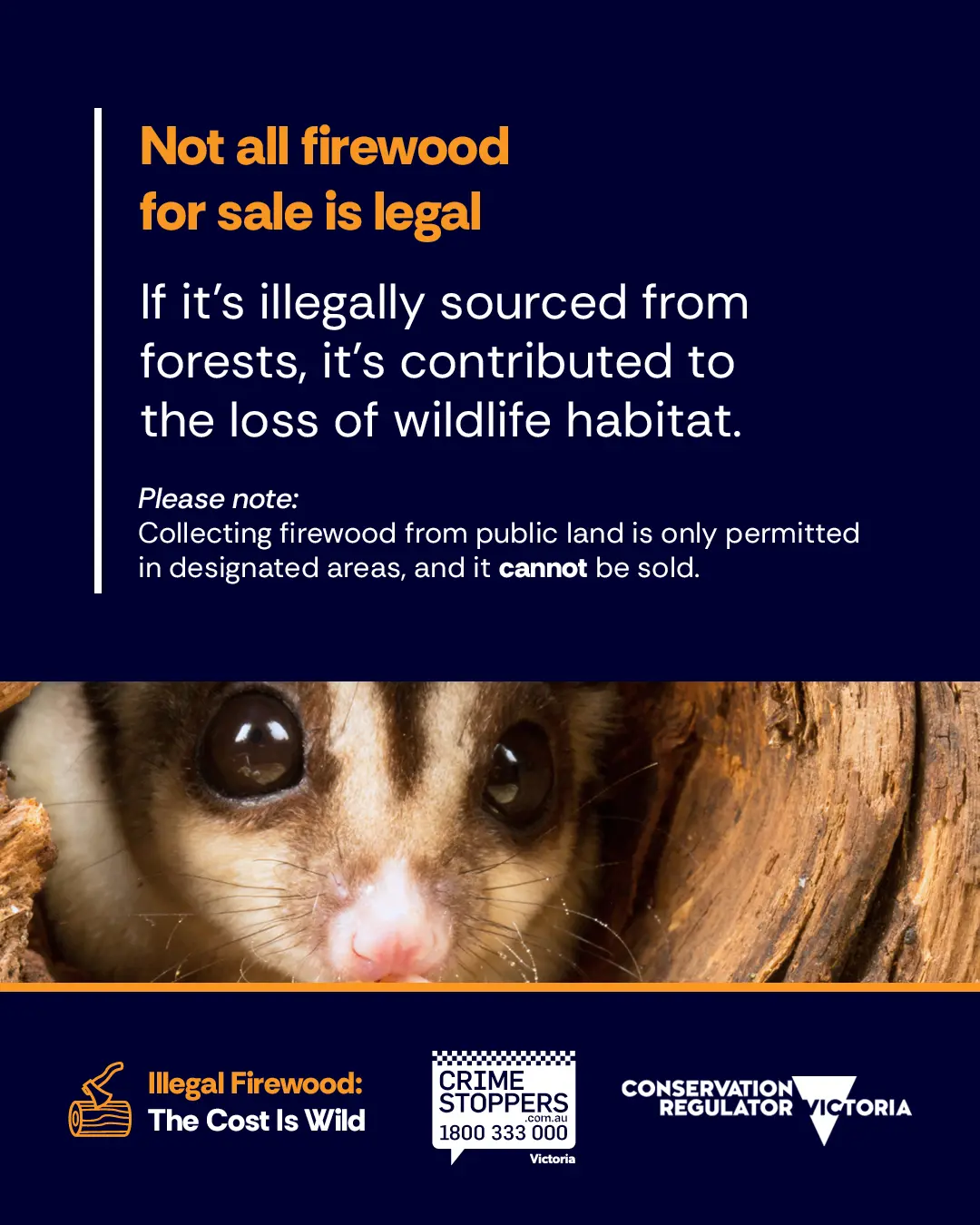
Illegal collection can wipe out habitat used by native species like:
- Possums
- Gliders
- Bats
- Birds
- Reptiles
Many depend on tree hollows in both standing and fallen timber.
Illegal firewood collection can:
- Destroy critical wildlife habitat, especially mature trees and fallen timber.
- Remove hollow-bearing wood, which many animals rely on to survive.
- Damage long-term forest health and ecosystem sustainability.
- Strip entire areas of mature trees.
- Harm Aboriginal cultural scarred trees.
If prosecuted in court, offenders may face:
- Equipment being seized
- Court penalties up to $10,175
- Up to 12 months in prison
Illegal firewood collection damages cultural heritage and wildlife habitat in Victoria’s forests and national parks.
Firewood can be collected in designated areas during set seasons, for personal use.
Selling firewood collected from these areas is illegal.
Collecting firewood outside of these areas is illegal.
Potential Signs of Illegal Firewood Collection
- Recently cut or damaged trees.
- Damaged vegetation, or habitat disturbance.
- Debris, waste, or signs of poor site practices.
- Chainsaws running at night or outside permitted hours.
- Trailers loaded with wood entering and exiting forests repeatedly.
- Activity in protected, signed, or no-collection areas.
- Vehicles parked off-road or in unusual/closed locations.
- Secretive behaviour or leaving quickly when noticed.
- Collecting large amounts or making frequent trips.
Illegal collection can wipe out habitat used by native species like:
- Possums
- Gliders
- Bats
- Birds
- Reptiles
Many depend on tree hollows in both standing and fallen timber.
Illegal firewood collection can:
- Destroy critical wildlife habitat, especially mature trees and fallen timber.
- Remove hollow-bearing wood, which many animals rely on to survive.
- Damage long-term forest health and ecosystem sustainability.
- Strip entire areas of mature trees.
- Harm Aboriginal cultural scarred trees.
If prosecuted in court, offenders may face:
- Equipment being seized
- Court penalties up to $10,175
- Up to 12 months in prison
Illegal firewood collection damages cultural heritage and wildlife habitat in Victoria’s forests and national parks.
Firewood can be collected in designated areas during set seasons, for personal use.
Selling firewood collected from these areas is illegal.
Collecting firewood outside of these areas is illegal.
Potential Signs of Illegal Firewood Collection
- Recently cut or damaged trees.
- Damaged vegetation, or habitat disturbance.
- Debris, waste, or signs of poor site practices.
- Chainsaws running at night or outside permitted hours.
- Trailers loaded with wood entering and exiting forests repeatedly.
- Activity in protected, signed, or no-collection areas.
- Vehicles parked off-road or in unusual/closed locations.
- Secretive behaviour or leaving quickly when noticed.
- Collecting large amounts or making frequent trips.
Illegal collection can wipe out habitat used by native species like:
- Possums
- Gliders
- Bats
- Birds
- Reptiles
Many depend on tree hollows in both standing and fallen timber.
Illegal firewood collection can:
- Destroy critical wildlife habitat, especially mature trees and fallen timber.
- Remove hollow-bearing wood, which many animals rely on to survive.
- Damage long-term forest health and ecosystem sustainability.
- Strip entire areas of mature trees.
- Harm Aboriginal cultural scarred trees.
If prosecuted in court, offenders may face:
- Equipment being seized
- Court penalties up to $10,175
- Up to 12 months in prison