

Gaslighting, managing finances, controlling decision making and using threats. These are all behaviours of coercive control.
In the realm of domestic abuse, coercive control can often be overlooked and misunderstood. Coercive control operates through psychological manipulation and emotional abuse, exerting power over the victim’s thoughts, feelings, and behaviours.
In a recent interview with Assistant Commissioner of Victoria Police Lauren Callaway, she explains this covert form of family violence.
“The term coercive control is used to describe a range of behaviours and tactics that are used by perpetrators of family violence. The purpose of coercive control is to undermine someone’s self-worth and to coerce them into doing things that the perpetrator wants them to do.”
Assistant Commissioner Victoria Police | Lauren Callaway
Understanding Coercive Control
Coercive control refers to a pattern of behaviour used by an abuser to dominate, intimidate, and manipulate their partner. It involves a wide range of tactics aimed at undermining the victim’s autonomy, independence, and sense of self-worth. These tactics can include:
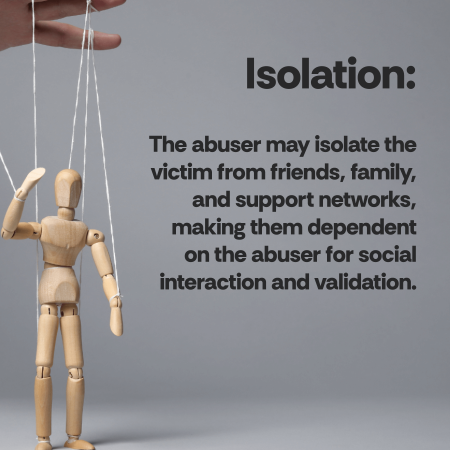
Isolation: The abuser may isolate the victim from friends, family, and support networks, making them dependent on the abuser for social interaction and validation.
Gaslighting: Gaslighting involves denying or distorting the victim’s reality, making them doubt their perceptions, memories, and sanity.
Intimidation: This can range from overt threats and physical violence to more subtle forms of intimidation, such as menacing looks or gestures.
Financial Abuse: The abuser may control all finances, leaving the victim financially dependent and unable to leave the relationship.
Manipulation: This includes emotional manipulation, guilt-tripping, and playing mind games to maintain control over the victim.
Victims of coercive control can feel trapped in these abusive relationships and often stay with the perpetrator.
“People stay in their relationship because the person that is committing coercive control isn’t like that all the time.”
Assistant Commissioner Callaway explained that “No one starts off that way either.”
“In fact, some of the behaviours like getting lots of text messages, lots of attention, being love bombed…all of that in a positive context would be things that people experience normally when they start a relationship.” Assistant Commissioner Callaway said that when this behaviour starts to become “controlling” and “sinister” and starts to make the victim question their own sense of normality, that is when victim survivors will realise, they are in an abusive relationship.
The Assistant Commissioner further explained that individuals may remain in abusive relationships for a multitude of reasons, with motivations varying for each survivor.
“If a perpetrator has been really manipulative and clever at committing coercive control, they’ve actually set up many reasons why the person couldn’t leave, so they’ll be already cut off from their social networks and from their friends and family.”
Assistant Commissioner Victoria Police | Lauren Callaway


Victims will likely have restricted access to finances or the resources necessary to leave. Therefore, without financial independence and social support, the decision of where to seek refuge and how to proceed becomes much more challenging.
Victoria, however, has a broad legislation that covers all definitions of family violence.
“We train police to recognise non-physical forms of family violence.”
It is important to note that family violence is not limited to heterosexual relationships.
“We know that at least 30% of all our family violence incidents involve a different dynamic,” Assistant Commissioner Callaway explained.
Whether that be LGBTQIA+ couples, elder abuse, adolescent family violence or abuse between carer and a person with a disability.
“If you think about each of those scenarios, they would also lend themselves to coercive controlling behaviour,”
For example, in the LGBTQIA+ community, it might be that an abuser is threatening to out their partner to friends and family that do not know their status or sexuality.
Coercive control can also include technology facilitated abuse or surveillance techniques. This can manifest in the installation of software on a victim survivor’s phone or devices and stalking behaviours. The Assistant Commissioner revealed that Victoria Police are seeing family violence perpetrators use banking transaction messaging system to reach victim survivors.
“Whatever way that the perpetrator can show the victim survivor that ‘you may have left me, but I can still get a message to you or have some influence over your life,’ they will do it.”
Assistant Commissioner Victoria Police | Lauren Callaway
Recognising the Signs
One of the challenges in addressing coercive control is that it often occurs behind closed doors, making it difficult to recognise from the outside. However, there are some common signs that may indicate a person is experiencing coercive control:
Excessive Jealousy: The abuser may exhibit extreme jealousy and possessiveness, accusing the victim of cheating or flirting with others.
Constant Monitoring: The abuser may monitor the victim’s movements, phone calls, and online activity, invading their privacy and controlling their every move.
Drastic Personality Changes: Victims of coercive control may become withdrawn, anxious, or depressed, exhibiting drastic changes in personality and behaviour.
Financial Dependence: The victim may have limited access to money and resources, relying on the abuser for financial support.
Excuses for Abuser’s Behaviour: Victims may make excuses for their abuser’s behaviour, blaming themselves or downplaying the severity of the abuse.
Recognising the signs of coercive control is crucial in combating this pervasive issue, even when it occurs behind closed doors, as understanding these indicators can empower individuals to seek help and support.
“I think that the issue of coercive control is one that is going to evolve over time but if I look at the police response today, I think we’ve come a long way.”
Assistant Commissioner Victoria Police | Lauren Callaway
Resources:
We provide specialist support services for anyone in Victoria who is experiencing or afraid of family violence.
1800RESPECT is available for free, 24 hours a day, 7 days a week to support people impacted by domestic, family or sexual violence.
National Debt Helpline is a not-for-profit service that helps people tackle their debt problems. Their professional financial counsellors offer a free, independent and confidential services.
Call triple zero (000) if the situation is serious and urgent. You should call triple zero (000) if: someone is seriously injured or needs urgent medical help your life or property is being threatened or in danger.
Lifeline 13 11 14, is a National charity providing all Australians experiencing emotional distress with access to 24 hour crisis support and suicide prevention services. darkest moments alone.